Views: 0 Author: Site Editor Publish Time: 2026-09-17 Origin: Site
High-current switching environments subject components to extreme thermal shock, localized melting, and vaporization. When electrical arcing occurs, materials must withstand immense physical stress. Poorly specified switchgear components fail rapidly due to inadequate material density and excessive porosity. These structural flaws cause rapid contact erosion, catastrophic micro-welding, internal oxidation, and premature device failure. Standard metal alloys simply cannot survive these severe conditions.
Powder metallurgy provides the standard manufacturing solution for combining refractory metals with highly conductive metals. Refractory elements deliver necessary arc resistance, while conductive elements handle current flow. This article provides a technical framework for evaluating how final part density impacts arc resistance, mechanical durability, and lifecycle performance. Engineers can use this data to specify reliable electrical contacts without over-engineering the final assembly.
Density Drives Conductivity: Higher density in powder metallurgy parts minimizes internal voids, directly increasing both thermal and electrical conductivity, which are critical for dissipating arc energy.
Porosity Accelerates Erosion and Oxidation: Surface and sub-surface porosity act as initiation sites for localized melting, material transfer, and internal corrosion during arcing events, degrading the lifespan of the contact.
Mechanical Properties Scale with Density: Hardness, ductility, and overall mechanical strength are directly governed by density, dictating how well a contact survives both the mechanical impact of closing and the explosive force of an arc.
Manufacturing Trade-Offs: Achieving near-theoretical density requires advanced pressing, optimized part design, or infiltration techniques, which increases tooling wear and unit cost. Specifications must balance arc load requirements with production budgets.
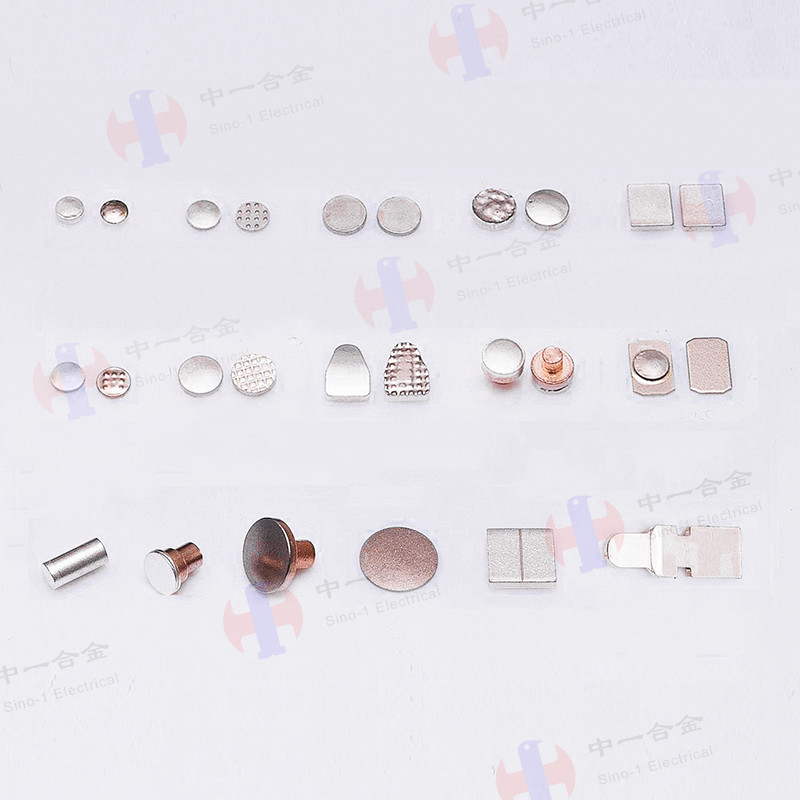
Application-Specific Matching: Component types, from a heavy-duty electrical contact rivet to a precision silver button contact, require distinct density thresholds based on their specific mechanical, electrical, and assembly load profiles.
Contact separation under load generates an electrical arc. As the physical contact area decreases during separation, electrical resistance spikes. This event creates a localized plasma channel between the parting surfaces. Temperatures within this plasma core frequently exceed 10,000 degrees Celsius, easily surpassing the boiling points of the constituent metals. The material undergoes rapid state changes from solid to liquid to vapor in milliseconds.
Success in this environment requires a component that can quench the arc, resist material vaporization, and maintain a stable surface geometry. If the material fails to dissipate the thermal energy quickly, the molten pool expands. This expansion causes severe material loss. It also increases the risk of the contacts welding shut upon the next closure. Engineers evaluate arc resistance based on three primary failure modes:
Arc Erosion: The volumetric loss of material due to vaporization and splatter during the arcing event.
Material Transfer: The migration of molten metal from one contact face to the other, creating peaks and valleys that alter the contact geometry.
Dynamic Welding: The fusing of the two contact surfaces when closed onto a molten pool, requiring excessive mechanical force to break the weld.
Materials resist arcing damage through two primary, yet opposing, mechanisms. First, the material must possess a high melting point. Refractory metals like tungsten or molybdenum serve this role. Tungsten melts at 3,422 degrees Celsius. It provides a rigid skeletal structure that resists melting and mechanical deformation under the explosive force of the arc. This refractory matrix prevents the entire contact from liquefying.
Second, the material requires rapid heat dissipation capabilities. Highly conductive metals like silver or copper form the conductive phase. Silver melts at 961 degrees Celsius but offers superior thermal and electrical conductivity. These metals pull thermal energy away from the localized arc strike zone and distribute it throughout the component body. The balance between the refractory skeleton and the conductive thermal highway dictates the overall arc resistance of the component.
Wrought alloys cannot achieve the necessary microstructures for heavy-duty arc resistance. Silver and tungsten are mutually insoluble. You cannot melt and cast them together without severe segregation occurring. If you attempt to melt the two metals, the silver will boil and vaporize long before the tungsten reaches its melting point.
Powder metallurgy solves this physical limitation. It allows manufacturers to blend immiscible metals into a uniform composite matrix without melting them together. By pressing and sintering fine metal powders below their melting points, engineers create powder metallurgy contacts that leverage the exact properties of both the refractory and conductive phases. This solid-state manufacturing process remains the only viable method for producing reliable switchgear components for high-voltage applications.
Porosity shares an inverse relationship with both thermal and electrical conductivity. Voids within the metal matrix act as physical barriers. They disrupt the free flow of electrons and impede thermal transfer. When an arc strikes a porous contact, the trapped gases and empty spaces prevent the conductive silver or copper phase from pulling heat away from the surface.
This disruption causes localized overheating. The surface temperature spikes rapidly, leading to deeper melt pools and accelerated material vaporization. High density minimizes these internal voids, ensuring a continuous conductive path that efficiently manages thermal loads. Even a 5% increase in porosity can drop the electrical conductivity of a silver-tungsten contact by over 15% IACS (International Annealed Copper Standard).
Theoretical Density (%) | Porosity Volume (%) | Impact on Thermal Conductivity | Arc Erosion Rate |
|---|---|---|---|
99% - 100% | 0% - 1% | Optimal heat dissipation | Minimal baseline erosion |
95% - 98% | 2% - 5% | Slight thermal bottlenecking | Moderate increase in vaporization |
90% - 94% | 6% - 10% | Severe disruption of thermal paths | Rapid material loss and deep melting |
Below 90% | > 10% | Thermal runaway risk | Catastrophic failure under load |
Compaction density directly dictates the mechanical integrity of the sintered part. During the pressing phase, applied pressures ranging from 400 to 800 MPa force the powder particles together. Increased pressure improves interparticle friction and mechanical interlocking, resulting in a higher "green density" before the part even enters the furnace.
This dense packing enhances metallurgical bonding (necking) during the subsequent sintering phase. The result is a material with superior hardness and ductility. Mechanical strength is inextricably linked to arc resistance. Stronger particle bonding allows the material to resist the mechanical shock of violent contact closure. It also withstands the explosive plasma forces generated during an arcing event, preventing the refractory tungsten particles from being dislodged from the silver matrix.
Surface density governs how a contact handles micro-welding and material transfer. High-density surfaces present a uniform, solid face to the electrical arc. This uniformity resists the formation of localized hot spots that cause micro-welding. The arc energy distributes evenly across the dense surface.
Conversely, surface voids in lower-density parts act as traps. They capture molten metal during the arcing process. As the contacts open and close, this trapped material is violently torn away through bridge transfer or arc transfer mechanisms. This uneven wear alters the contact geometry over thousands of cycles. A degraded surface geometry increases contact resistance and accelerates the failure of the entire switching mechanism.
Higher density actively prevents the ingress of corrosive gases and moisture into the core of the component. Porous materials feature interconnected void networks. These networks allow atmospheric oxygen, sulfur, and industrial pollutants to penetrate deep into the metal matrix. This penetration causes internal oxidation and sulfidation.
Minimizing internal contamination maintains low contact resistance over the lifecycle of the component. If internal oxidation occurs, the electrical resistance rises, leading to thermal runaway and catastrophic failure under load. Dense compaction eliminates these interconnected pathways, sealing the interior of the contact from the operating environment.
Different composite structures require specific density targets based on their refractory materials and intended applications. Silver-Tungsten (Ag-W), Silver-Tungsten Carbide (Ag-WC), Silver-Graphite (Ag-C), and Silver-Tin Oxide (Ag-SnO2) represent common solutions. Each composite demands a unique approach to pressing and sintering to achieve optimal interparticle bonding strength.
Composite Material | Primary Application | Target Density Requirement | Key Performance Characteristic |
|---|---|---|---|
Silver-Tungsten (Ag-W) | Heavy-duty molded case circuit breakers | > 96% | Maximum arc erosion resistance under high fault currents |
Silver-Tungsten Carbide (Ag-WC) | Motor contactors, earth leakage breakers | > 94% | Excellent resistance to micro-welding and mechanical wear |
Silver-Tin Oxide (Ag-SnO2) | Automotive relays, general purpose contactors | > 95% | High thermal stability and low material transfer |
Silver-Graphite (Ag-C) | Miniature circuit breakers (MCB) | > 92% | Superior anti-welding properties due to graphite lubrication |
Medium-to-high load relays frequently utilize a silver button contact. These components demand a precise balance of properties. The silver matrix must maintain high density to ensure low contact resistance and prevent overheating during continuous current flow. Relays often experience contact bounce upon closure, generating multiple micro-arcs in rapid succession.
The refractory particles within the button must be densely packed to provide necessary arc erosion resistance and surface hardness against this bouncing effect. If the button contact lacks uniform density, the silver phase will erode too quickly. This erosion leaves a brittle refractory skeleton that eventually crumbles under the mechanical impact of the relay armature.
Structural demands dictate the manufacturing approach for an electrical contact rivet. This component requires a highly engineered density gradient or a bimetal construction. The head of the rivet sustains the direct arc strike and mechanical impact. Therefore, it requires maximum density for optimal arc resistance and hardness.
However, the shank of the rivet must remain ductile. During assembly, the shank is mechanically deformed through staking or cold heading to secure the contact to the terminal blade. If the shank is too dense and brittle, it will crack during assembly. Engineers specify manufacturing processes, such as cold bonding pure silver shanks to composite heads, to deliver this dual-density requirement reliably.
Component design heavily influences the final density of the sintered part. Proper Design for Manufacturability (DFM) facilitates uniform powder fill in the die cavity. It also ensures optimal interparticle friction during the compaction stroke. Engineers evaluate the length-to-diameter (L/D) ratio of the part. Ratios exceeding 3:1 often result in severe density gradients, where the center of the part remains porous while the ends are highly compacted.
Engineers avoid extreme aspect ratios, ultra-thin walls, or sharp internal radii. These features cause uneven powder distribution and create low-density zones within the part. Proper DFM enables manufacturers to achieve higher, more consistent density without requiring excessive press tonnage, thereby reducing tooling wear and production delays.
Achieving near-theoretical density imposes strict manufacturing constraints. It requires higher tonnage presses, which increases operational overhead. The extreme pressures also accelerate die wear. Standard tool steel dies degrade rapidly under these loads, necessitating the use of expensive tungsten carbide tooling.
Manufacturers employ complex powder lubrication strategies, adding zinc stearate or synthetic waxes to the powder blend, to prevent the part from seizing in the die during ejection. Furthermore, processing speeds matter. Overly fast pressing or improper sintering profiles in hydrogen atmospheres can induce high dislocation densities within the crystal lattice. These dislocations negatively impact electrical conductivity, counteracting the benefits of the high physical density.
Standard press-and-sinter operations often plateau around 90-93% theoretical density. Applications requiring superior arc resistance demand advanced secondary operations. These processes push the density closer to 99% but require additional manufacturing steps.
Repressing (Coining): Placing the sintered part back into a precision die and applying massive pressure to collapse remaining internal voids. This also improves dimensional accuracy.
Liquid Phase Sintering: Using a specific temperature profile to melt a minor constituent of the powder blend. Capillary action pulls the solid particles closer together as the liquid phase fills the voids.
Infiltration: Pressing and sintering a porous refractory skeleton (e.g., pure tungsten). The skeleton is then placed in a furnace with a slug of pure silver. The silver melts and is drawn into the interconnected pores of the tungsten skeleton via capillary action, resulting in a nearly 100% dense composite.
Engineers balance performance requirements against procurement budgets. Specifying >99% density is mandatory for critical aerospace applications, heavy industrial switchgear, and high-voltage grid components. In these environments, failure causes catastrophic system downtime and safety hazards.
Accepting 90-95% density is appropriate for consumer-grade, low-cycle applications like residential light switches or basic appliance relays. Over-specifying density for low-load applications wastes budget on unnecessary secondary operations like infiltration or coining. A clear decision framework based on actual load profiles, expected cycle life, and fault current ratings prevents costly over-engineering.
Procurement teams verify that suppliers meet specified density targets using industry-standard evaluation methods. Archimedes' principle (ASTM B328) remains the standard for determining overall bulk density by measuring water displacement. However, bulk density does not reveal internal density gradients or localized porosity.
Micrograph analysis involves cross-sectioning the contact, polishing the surface, and examining the porosity distribution under a microscope. This destructive testing confirms the absence of interconnected void networks. Non-destructive eddy current testing offers a rapid way to verify material consistency and detect sub-surface voids across high-volume production batches without destroying the components.
Inconsistent powder blending, variations in apparent density, and pressing fluctuations introduce severe batch-to-batch variability. A single batch of low-density contacts compromises an entire production run of switchgear. Engineers audit supplier quality control systems rigorously.
Evaluate powder handling procedures, specifically checking the Hall flow rate and apparent density of incoming powder lots. Review press monitoring capabilities and sintering furnace temperature controls. Establish strict acceptance criteria for interparticle bonding, hardness, and density. Require detailed Statistical Process Control (SPC) inspection reports for every lot to ensure consistent performance across high-volume production runs.
To ensure successful implementation of powder metallurgy contacts, execute the following steps:
Audit current contact specifications to ensure density targets align with actual electrical load profiles and fault current ratings.
Redesign component geometry to eliminate sharp internal radii and maintain an L/D ratio below 3:1 for uniform powder compaction.
Initiate a prototyping phase that includes destructive arc-testing, metallographic cross-sectioning, and hardness verification before approving full-scale production tooling.
Implement non-destructive eddy current testing protocols for incoming quality inspection of all high-volume batches.
Require suppliers to provide SPC data on green density and sintered density for every production lot.
A: Pores act as physical barriers to thermal and electrical conductivity. They cause localized overheating during arc strikes. These voids also act as crack initiation sites under mechanical stress, accelerate material vaporization, and invite internal oxidation, all of which drastically reduce the contact's operational lifespan.
A: The ideal density for heavy-duty applications is typically greater than 96% of the theoretical maximum. The exact target depends on the specific ratio of silver to tungsten and the application's peak current load. Higher fault current loads demand densities closer to 99%.
A: Yes. Higher density eliminates interconnected surface pores. This prevents atmospheric moisture, sulfur, and corrosive industrial gases from penetrating the core of the contact, thereby stopping internal oxidation and preventing the degradation of electrical conductivity over time.
A: Yes. You can improve arc resistance by utilizing secondary manufacturing operations. Techniques like repressing (coining) or metal infiltration collapse internal voids, significantly increasing the final density, surface hardness, and thermal dissipation capabilities of the component.
A: Casting cannot successfully mix refractory metals like tungsten with conductive metals like silver due to their mutual insolubility and vastly different melting points. Powder metallurgy allows these immiscible metals to be blended uniformly without segregation, providing both high arc resistance and excellent conductivity.
A: Bulk density is typically measured using Archimedes' principle of water displacement. Internal density gradients and porosity distribution are evaluated through destructive cross-sectional microscopy. Non-destructive eddy current testing is also used for rapid, high-volume consistency checks on the production line.
A: Generally, yes. Higher density improves conductivity by removing insulating voids and establishing a continuous metal matrix. However, if the high density is achieved through overly fast processing that induces high dislocation density in the crystal lattice, conductivity can be negatively impacted despite the high physical density.